No bean has been transformed by human patience as many times, in as many places, as the soybean. Eaten straight, it’s modest. Given time — and the right culture — it becomes some of the most loved foods in Asia.
Four classics, one lesson
Tempe (Java). Soybeans bound into a firm cake by a friendly mould, in about two days. Indonesia’s everyday protein, and Malaysia adopted it long ago.
Miso (Japan). Soy, koji and salt, aged from months to years. The longer it waits, the deeper it gets — some misos outlast the pots they age in.
Natto (Japan). Perhaps fermentation’s boldest personality: sticky, pungent, unmistakable. Loved fiercely by those who grew up with it.
Soy sauce (everywhere). The quiet result of soy, wheat, culture and brine, brewed slowly. The bottle on every Malaysian table is a fermentation story with centuries behind it.
What fermentation actually does
In every case, the recipe is the same three ingredients: soy, culture, time. Microorganisms and their enzymes slowly work on the bean — changing its texture, aroma, and character into something the original bean never was. Every food culture that loved soy discovered this independently, long before anyone could explain it. The lesson was always the same: don’t rush it.
The modern chapter
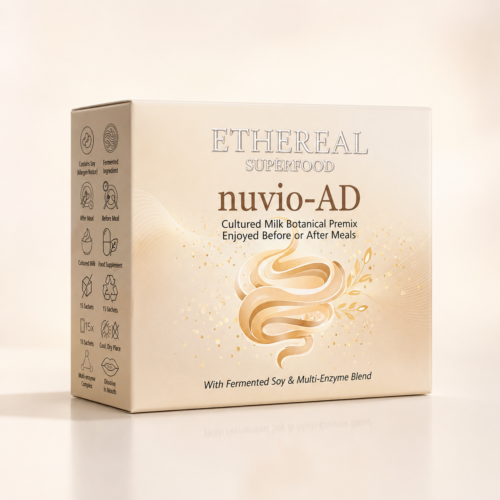
Today that old lesson can be applied with modern discipline — controlled fermentation, defined processes, batch consistency. That’s what Gastro-AD® is: a specific fermented soy, made to a specification, carrying its maker’s name. It’s one of the two named actives in nuvio-AD, and the reason it earned its place on our label is the same reason tempe earned its place at the table: soy that wasn’t rushed.
nuvio-AD is a food, not a medicine. Contains soy and milk.