“Digestive enzymes” sounds like laboratory language, but enzymes are among the most ordinary things in food. They’re in the papaya on your breakfast table, the tempe at the economy rice stall, and every traditional ferment your grandmother ever made. Here’s the plain-language version.
Enzymes are food’s own workers
An enzyme is a protein that helps a specific job happen faster. In the food world, the famous trio is: amylase, which works on starches and carbohydrates; protease, which works on proteins; and lipase, which works on fats. Every one of them exists in nature — in fruits, grains, sprouts and ferments — and cooks have been borrowing their help for centuries without knowing their names. Pineapple tenderising meat? That’s a protease called bromelain, doing what proteases do.
From tradition to specification
What changed in the modern era is precision. Ingredient makers can now produce food enzymes to a defined standard — the same activity, batch after batch — and state exactly what’s in a blend. That’s the difference between a traditional ferment (wonderful, but different every time) and a standardised ingredient (the same, every time).
The label test: named blend vs “proprietary complex”
Here’s a supplement-aisle habit worth developing: when a label says “proprietary enzyme complex”, ask what that actually tells you. Which enzymes? How much? Made by whom? Vague labels are where trust goes to die.
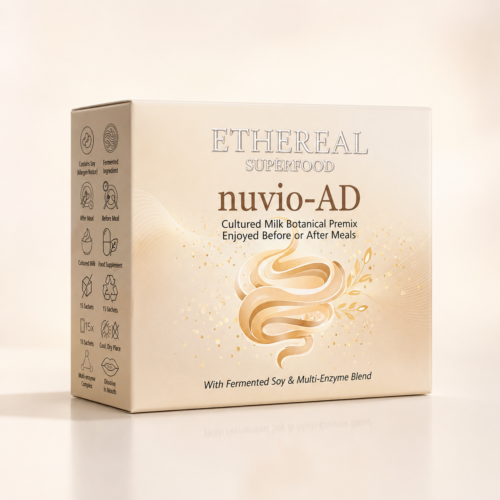
A named, trademarked blend is the opposite — it has a maker, a specification, and accountability. It’s why our formula uses DigeZyme®, a standardised multi-enzyme blend, stated on the nuvio-AD label in full. Precision isn’t a promise about your body; it’s a promise about sourcing.
The honest footnote
This article is general food education, not medical advice — and nuvio-AD is a food, not a medicine. If you have questions about your own digestion, a doctor, pharmacist or dietitian is the right person to ask.